

As China accelerates its semiconductor self-sufficiency strategy and AI continues to drive explosive demand for memory chips, ChangXin Memory Technologies (CXMT) has emerged as one of the few direct iAs China accelerates its semiconductor self-sufficiency strategy and AI continues to drive explosive demand for memory chips, ChangXin Memory Technologies (CXMT) has emerged as one of the few direct i
ChangXin Memory Technologies ($CXMT): China's DRAM Champion Powering the Next Memory Supercycle

As China accelerates its semiconductor self-sufficiency strategy and AI continues to drive explosive demand for memory chips, ChangXin Memory Technologies (CXMT) has emerged as one of the few direct investment opportunities in this space. Just nine years after its founding, the company has become the world's fourth-largest DRAM manufacturer, capturing 7.67% of the global market. With revenue and profits surging throughout 2025 and 2026, CXMT is now preparing for its IPO on China's STAR Market. Once CXMT shares begin trading publicly, investors, including users on exchanges such as MEXC, will have the opportunity to gain exposure to one of China's most important semiconductor companies.
Key Takeaways
- CXMT is China's largest DRAM manufacturer and has become the world's fourth-largest DRAM producer in just nine years.
- The company is benefiting from the AI memory supercycle, rapidly growing DRAM demand, and China's semiconductor self-sufficiency strategy.
- Its upcoming STAR Market IPO could become one of the largest semiconductor listings in China.
- CXMT still faces risks from the industry's cyclical nature, U.S. technology restrictions, and its technology gap with global competitors.
- Investors should closely monitor HBM development, IPO progress, and the overall DRAM market cycle before making investment decisions
1. What Is CXMT?
ChangXin Memory Technologies ($CXMT) is China's only large-scale integrated DRAM designer and manufacturer. DRAM (Dynamic Random-Access Memory) is the type of volatile memory used to temporarily store data being processed by smartphones, personal computers, and servers. Alongside NAND flash, DRAM forms one of the two core pillars of the global memory industry.
The company was founded in 2016 in Hefei, Anhui Province, originally under the name Project 506, an initiative launched by the Hefei municipal government. The project received substantial backing from the local industrial investment fund, with an initial commitment of approximately US$7.2 billion for its manufacturing facilities. During its early development, the company was also known as Innotron and Ruili Integrated Circuit. Today, its headquarters remain in Hefei, while it operates three 12-inch wafer fabrication plants across Hefei and Beijing.
The company is led by Zhu Yiming, a graduate of Tsinghua University and the founder of GigaDevice, China's leading NOR flash manufacturer that went public in 2016. In 2018, Zhu took over as Chairman and CEO of CXMT, publicly pledging not to receive a salary until the company became profitable. He continues to lead both companies simultaneously.
Together with YMTC, China's leading NAND flash producer, CXMT is widely regarded as one of the country's two strategic memory champions, representing the two most critical segments of China's semiconductor self-sufficiency ambitions.
CXMT deserves close attention because DRAM had long been one of the largest missing pieces in China's semiconductor industry. For more than three decades, almost no new DRAM manufacturer had successfully established itself globally. The market has been dominated by Samsung, SK hynix, and Micron, which collectively control more than 90% of global DRAM market share. As the world's largest importer of semiconductor chips, China's ability to establish a domestic DRAM producer of meaningful scale carries enormous strategic significance.
2. Growth Journey and Product Portfolio
CXMT took only nine years to grow from a startup into the world's fourth-largest DRAM manufacturer.
In 2019, the company successfully shipped China's first domestically developed 8Gb DDR4 DRAM chip, a milestone widely regarded as the moment China's DRAM industry moved "from zero to one."
In November 2023, CXMT introduced China's first domestically developed LPDDR5 chip, paving the way for its expansion into the mid-range and premium smartphone memory markets.
The year 2025 marked another major milestone as DDR5 entered commercial shipments while LPDDR5X moved into mass production.
CXMT's global market share expanded rapidly from 3.97% in Q2 2025 to 7.67% in Q4 2025, nearly doubling within just six months. This represents one of the fastest market share gains ever recorded in the DRAM industry during a major growth cycle.
Its current product portfolio includes:
- DDR5 (servers and PCs): Commercial shipments began in early 2025 using the G4 process platform, offering speeds of up to 8000 Mbps and capacities reaching 24Gb.
- LPDDR5X (premium smartphones): Entered mass production in 2025, delivering speeds of up to 10,667 Mbps, approximately 66% faster than the previous generation.
- LPDDR5 / LPDDR4X (mainstream smartphones): Already in mass production and contributed roughly 70% of first-half 2025 revenue.
- DDR4 (legacy generation): Production phase-out was announced in Q3 2025, with complete discontinuation expected by mid-2026 as manufacturing capacity shifts toward DDR5.
- HBM2 / HBM2E (AI accelerators): Sampling began during the first half of 2025, with mass production targeted for 2026.
- HBM3 (high-end AI memory): Mass production is planned for late 2026, targeting approximately 60,000 wafers per month, representing around 20% of the company's total manufacturing capacity.
CXMT is executing an aggressive product upgrade strategy by gradually phasing out lower-margin DDR4 products, prioritizing DDR5 and LPDDR5X, while accelerating its expansion into HBM, the highest-margin segment of the AI memory market. Supported by this product transition and a sharp rise in average selling prices, revenue from the company's DDR product line increased by 515% during 2025.
On the manufacturing side, CXMT has successfully commercialized four process generations, ranging from G1 to G4.
Its latest G4 platform is based on an approximately 16nm-class process, reducing die size by roughly 20% compared with the previous G3 (~18nm) generation.
By comparison, the industry's leading manufacturers are already producing sixth-generation 10nm-class (1-gamma) DRAM, typically around 11-12nm, with some products utilizing EUV lithography. This places CXMT approximately two to three technology generations behind the industry's global leaders.
Manufacturing capacity has expanded dramatically over the past several years:
- Approximately 20,000 wafers per month in 2019.
- Around 200,000 wafers per month by the end of 2024.
- Approximately 240,000 wafers per month by the end of 2025.
- A target of 300,000 wafers per month in 2026.
This production scale positions CXMT as the world's fourth-largest DRAM manufacturer by capacity.
The company's major customers include Alibaba Cloud, Tencent, ByteDance, Lenovo, Xiaomi, Honor, OPPO, vivo, and Transsion. Meanwhile, its DDR5 server memory products are currently undergoing qualification with several of China's leading cloud service providers.
3. Financial Performance and IPO Plan
CXMT has followed a rare financial trajectory, recording losses for nine consecutive years before delivering an explosive turnaround thanks to the memory cycle. Revenue increased from RMB 8.29 billion in 2022 to RMB 9.09 billion in 2023, RMB 24.18 billion in 2024, and RMB 61.80 billion (approximately US$9 billion) in 2025. The company also reported its first-ever annual net profit of RMB 1.88 billion.
The biggest highlight came in Q1 2026. Revenue reached RMB 50.80 billion, up 719% year over year, while net profit attributable to shareholders surged to RMB 24.76 billion. Profit from a single quarter exceeded more than twice the company's total net profit for the whole of 2025. Operating cash flow reached RMB 42.57 billion. Management forecasts first-half 2026 revenue of RMB 110 to 120 billion, with net profit expected to range between RMB 50 and 57 billion.
Gross margin also improved dramatically, rising from negative 112.71% in 2023 to 40.99% in 2025, slightly surpassing Samsung's semiconductor division during the same period. This improvement was driven by two major factors: a higher-value product mix through the transition to DDR5 and LPDDR5X, and the sharp recovery in DRAM prices during the current upcycle.
CXMT's fundraising history demonstrates strong backing from both the Chinese government and major technology companies. Its latest funding round in June 2025 included participation from Alibaba Cloud at a valuation of RMB 158.4 billion. Other investors include the National Integrated Circuit Industry Investment Fund Phase II (Big Fund II) with an 8.73% stake, Anhui provincial investment funds, Tencent, Xiaomi, and GigaDevice.
STAR Market IPO Plan:
- July 2024: IPO guidance filing submitted.
- October 2025: Guidance process completed.
- December 30, 2025: Application accepted by the Shanghai Stock Exchange under its accelerated pre-review mechanism.
- May 27, 2026: Listing committee approval obtained and registration submitted on the same day.
- Target fundraising: Up to RMB 29.5 billion (approximately US$4.3 billion) through the issuance of up to 10.622 billion shares, representing at least 10% of the company's post-listing equity.
The IPO proceeds will be allocated as follows:
RMB 7.5 billion for fab upgrades.
RMB 13 billion for next-generation DRAM technology development.
RMB 9 billion for future research and development.
This is expected to become the largest mainland China IPO since 2022 and the second-largest listing in STAR Market history after SMIC. Some market participants have speculated that CXMT's post-listing valuation could reach RMB 2 to 3 trillion. However, such estimates represent a substantial premium over its latest private valuation of RMB 158.4 billion and should therefore be viewed with caution.
4. The DRAM Industry and the AI Opportunity
The DRAM industry has one of the longest and most competitive histories in semiconductors. It originated in the United States during the 1970s, shifted to Japan in the 1980s, and has been dominated by South Korea since the 1990s. Every downturn eliminated numerous manufacturers, eventually leaving only Samsung, SK hynix, and Micron controlling more than 90% of the global market for decades.
DRAM is a highly standardized commodity whose pricing fluctuates significantly based on supply and demand. Following the 2017 to 2018 supercycle, the industry experienced severe downturns in both 2019 and 2023. Beginning in 2024, however, explosive AI data center demand fundamentally changed market dynamics. Leading manufacturers redirected production capacity toward HBM and high-end server DRAM, resulting in shortages of conventional DRAM products. TrendForce estimates that AI applications will consume approximately 20% of global DRAM wafer capacity by 2026.
Global DRAM industry revenue reached approximately US$165 billion in 2025, representing a 73% increase from the previous year. The broader memory market, including both DRAM and NAND, is projected to reach US$551.6 billion in 2026 before potentially peaking at US$842.7 billion in 2027. Memory revenue in 2026 is expected to exceed twice the revenue of the global foundry industry, which is forecast at US$218.7 billion. This would mark the first time in semiconductor history that the memory sector generates such a large revenue advantage.
CXMT stands out as one of the biggest beneficiaries of the conventional DRAM shortage created by competitors shifting their resources toward AI memory products. At the same time, China's semiconductor import substitution strategy provides a powerful policy tailwind, allowing CXMT to compete with structural support that extends beyond a normal industry cycle.
5. Competitive Landscape
According to Q4 2025 data, the global DRAM revenue market share was distributed as follows:
- Samsung (South Korea): 36.0%
- SK hynix (South Korea): 32.1%
- Micron (United States): 22.4%
- CXMT (China): 7.67%
- Taiwanese manufacturers (Nanya, Winbond, etc.): Approximately 2%
CXMT has effectively pushed smaller DRAM manufacturers into marginal positions and established itself as the industry's legitimate fourth major player. However, its revenue remains only around one-third of Micron's, while its manufacturing technology still trails leading competitors by approximately two to three generations.
SK hynix has emerged as the biggest winner of the current memory cycle thanks to its dominant position in HBM. Micron, meanwhile, faced setbacks following China's cybersecurity review in 2023, causing part of domestic demand to shift toward CXMT. Fujian Jinhua serves as a cautionary example after being prosecuted by the United States and losing access to advanced manufacturing equipment. YMTC, China's leading NAND producer and CXMT's strategic counterpart, is also preparing for its own STAR Market listing.
Importantly, CXMT does not need to surpass the global leaders worldwide. Simply replacing imported DRAM within China, the world's largest DRAM consumption market, would provide enough demand to sustain a company several times larger than it is today.
6. Trading CXMT on MEXC Exchange
With $CXMT preparing for its official listing on Shanghai's STAR Market, now is an ideal time for investors to get ready for potential exposure to the company. To meet growing market demand, MEXC offers users convenient access to trading products related to CXMT.
MEXC provides a fast trading platform, competitive fees, and flexible leverage options, allowing investors to capitalize on the price volatility of technology-related assets such as CXMT both before and after its official listing. Combined with deep liquidity and a broad range of derivative products, MEXC offers traders a more convenient and efficient way to gain exposure to CXMT's growth potential compared with many traditional investment channels.
Although CXMT has not yet officially gone public, its strong financial performance and steady IPO progress have already attracted significant investor attention. Establishing exposure through MEXC before the official listing may allow traders to position themselves ahead of future market developments.
You can visit MEXC today to explore trading products related to CXMT and other leading Chinese semiconductor companies. Do not miss the opportunity to participate in the growth story of the world's fourth-largest DRAM manufacturer through one of the industry's leading crypto trading platforms.
Disclaimer: This content does not constitute investment, tax, legal, financial, or accounting advice. MEXC Blog provides this information for educational purposes only. Always do your own research, understand the risks, and invest responsibly.
市場機遇
Gensyn實時價格 (AI)
--
----
USD
Gensyn (AI) 實時價格圖表
本頁面分享的文章均源自公開平台,僅供參考。該內容不代表 MEXC 的立場或觀點。所有版權歸 Van Dat Phan 所有。如果您認為任何內容侵犯了第三方的權益,請聯絡 service@support.mexc.com 以便及時刪除。 MEXC 不保證任何內容的準確性、完整性或及時性,且不對基於所提供信息而採取的任何行動負責。本內容不構成財務、法律或其他專業建議,亦不應被解釋為 MEXC 的推薦或認可。如需專家見解和深入分析,請造訪 MEXC 學院。
學習更多 Gensyn 知識
查看更多
如何用加密貨幣支付訂閱費用?用 MEXC Global Card 支付串流、AI 工具與 SaaS
把每個月不需要您動手、就自動從帳戶扣走的費用加總起來:一個串流方案、一個 AI 助理、一份雲端儲存空間,還有一個您一直說要取消卻始終沒取消的設計工具。 而當您手上的錢是 USDT 時,要付掉這一整疊訂閱,就得先出金、等待款項到帳,再改用其他方式付款。 MEXC Global Card 是 MEXC 推出的第二張 Visa 卡,已於 2026 年 8 月 31 日上線。它與原有的 MEXC Card
2026/09/11

美股週報 9月4日–9月11日 | HOOD 單週飆漲近20%,比特幣突破81,000美元——在這波美股與幣種話題漲勢中,你獲得了未實現收益嗎?
本週,美股的主題不是AI,而是流動性。 8月ADP私營部門就業人數僅增加38,000人,低於市場預期的48,000人;ISM製造業PMI與JOLTS職位空缺數同步走軟。在勞動市場持續釋放降溫訊號後,聯準會理事沃勒表示,若通膨壓力緩解,他願意維持利率不變——9月升息機率從約66%迅速下滑,懸在風險資產頭上的利劍暫時收鞘。 市場反應立即且強烈。9月3日,三大指數全面反彈,道瓊指數創下近一個月來最佳單日
2026/09/11

如何使用AI進行幣種話題分析
幣種市場分析涉及的遠不止檢查比特幣或其他資產是否上漲或下跌。交易者需要理解價格結構、交易量、波動性、技術指標、市場新聞、板塊趨勢,以及每次波動背後的更廣泛背景。 困難在於這些訊號很少單獨存在。 急劇的價格上漲可能得到成交量上升和正面新聞的支撐,也可能發生在流動性薄弱且沒有明確催化劑的情況下。看跌的技術訊號可能在整體市場仍然強勁時出現。重大公告可能看似正面,但已經反映在價格中。 人工智慧可以幫助交易
2026/09/10
Gensyn 最新動態
查看更多
MEXC 鏈上日報:隨著歐洲合規監管趨嚴,Revolut 將於八月底前下架 USDT
加密市場持續發展,伴隨監管動態、AI基礎設施擴張及機構參與度不斷提升。英國推出全新加密監管框架,穩定幣驅動的跨境支付獲得更廣泛應用,以AI為核心的區塊鏈生態系統加速轉型,同時市場關注點轉向宏觀經濟事件以及數位資產各板塊間不斷變化的資金流向。
2026/07/06
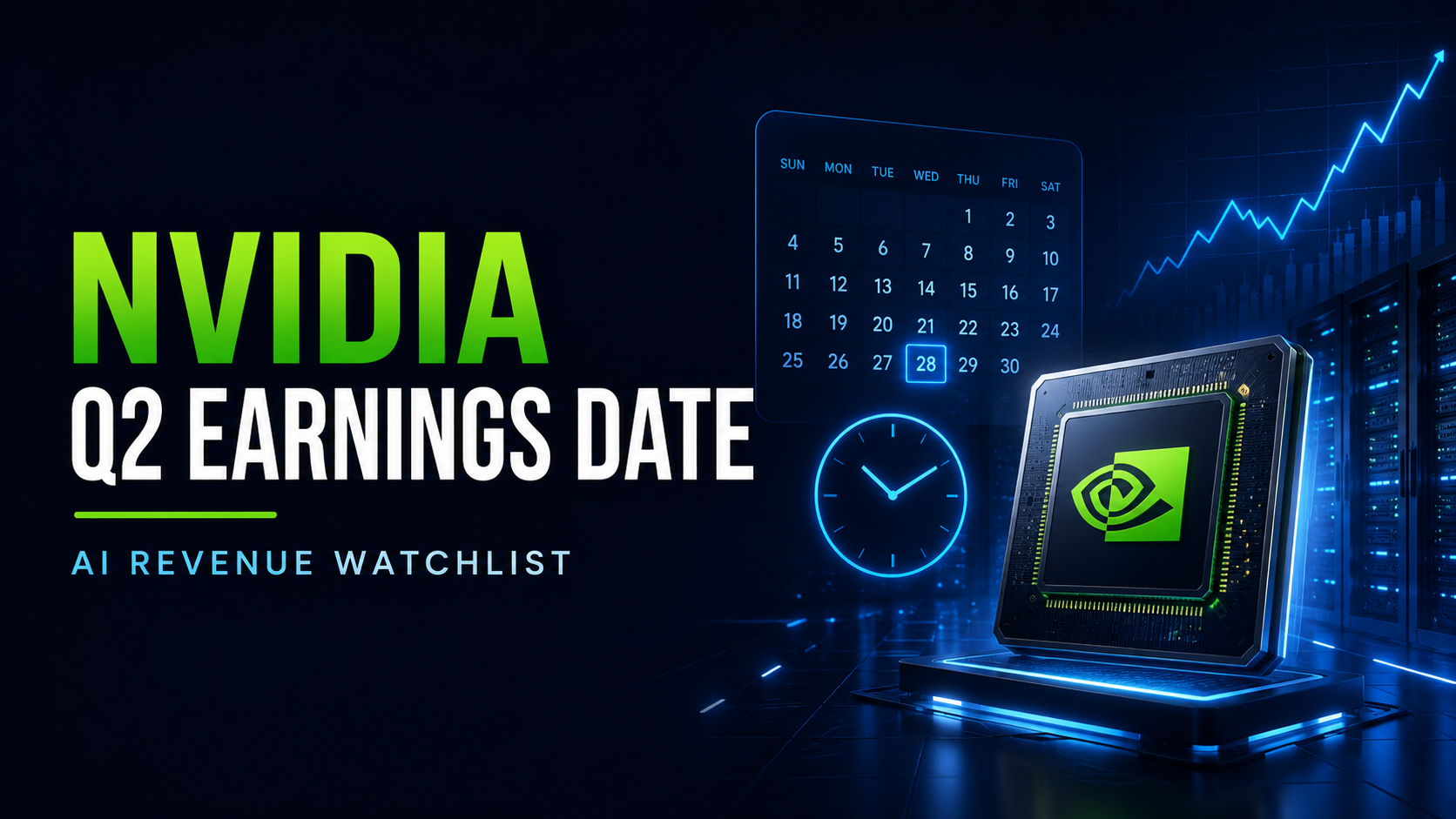
輝達2027財年第二季財報發布日期:預期發布時間、財報電話會議及AI營收觀察名單
Nvidia 2027 財年第 2 季財報預計將成為夏季最重要的 AI 市場事件之一。Wall Street Horizon 顯示,Nvidia 2027 財年第 2 季的下次財報發布日期為 2026 年 8 月 26 日星期三,於市場收盤後公布。
這絕非一次普通的財報發布。Nvidia 自身對 2027 財年第 1 季的展望設下了極高的標準:該公司預估第 2 季營收將達 910 億美元,誤差範圍為正負 2%,且 Non-GAAP 毛利率預計約為 75.0%。Nvidia 亦明確指出,其展望假設不計入來自中國的資料中心運算營收,這使得即將發布的財報能更純粹地檢驗中國以外的 AI 基礎設施需求。
對交易員而言,關鍵問題已不再只是 Nvidia 能否超越市場預期。更重要的問題在於,該公司能否持續將 AI 需求轉化為營收成長與利潤韌性,並提出足夠強勁的前瞻指引,以捍衛市場對 AI 基礎設施的溢價估值。
2026/07/06
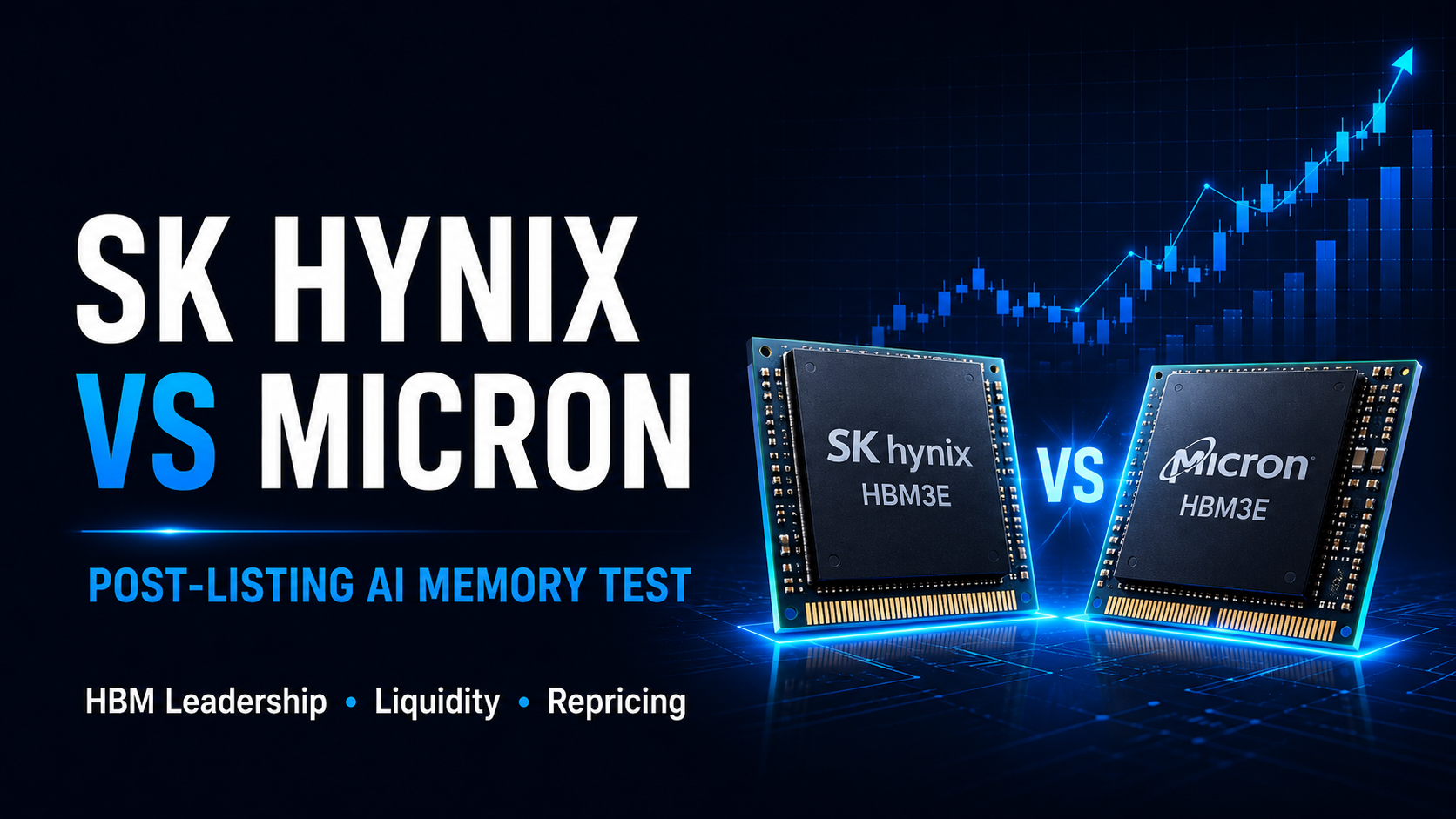
SK海力士對決美光:即將到來的SKHY上市如何重新定價AI記憶體與HBM領導地位
SK海力士備受矚目的納斯達克上市(股票代碼:SKHY)勢必將改變美國投資者評估AI記憶體股的方式。多年來,美光科技(MU)一直是交易DRAM、NAND以及由AI推動的資料中心需求時,首選的美國上市代理標的。與此同時,SK海力士鞏固了其作為高頻寬記憶體(HBM)主導力量的聲譽,儘管其主要在韓國上市,使得海外投資者更難參與投資。
隨著SKHY美國存託憑證(ADR)的推出,這種可及性差距正在迅速縮小。這不僅僅是一個早期成長故事進入市場——SK海力士是在AI大幅漲勢之後登場,並帶著其在HBM領域的主導地位敘事。對交易者而言,真正的問題不在於哪家公司「更好」。相反,關鍵在於識別更優的交易佈局:市場會因為SK海力士在HBM的主導地位和新獲得的流動性而給予獎勵,還是繼續堅持選擇美光科技經證實的美國市場通路和創紀錄的獲利?
2026/07/08


熱門
目前熱門備受市場關注的加密貨幣
加密貨幣價格
按交易量計算交易量最大的加密貨幣