

OverviewSouth Korea is doing something few jurisdictions have attempted, which is writing tokenized securities into the existing capital markets framework. Amendments to the Electronic Securities Act OverviewSouth Korea is doing something few jurisdictions have attempted, which is writing tokenized securities into the existing capital markets framework. Amendments to the Electronic Securities Act
Hanwha Builds a Tokenized Securities Platform on Avalanche as South Korea's February 2027 Rules Approach

Overview
South Korea is doing something few jurisdictions have attempted, which is writing tokenized securities into the existing capital markets framework. Amendments to the Electronic Securities Act and Capital Markets Act take effect on February 4, 2027, and from that date distributed ledgers become legally valid securities registers in a market where the Korea Securities Depository holds a record of every stock and bond in the country. Hanwha Investment & Securities has completed the infrastructure to meet that deadline. The Seoul Economic Daily reported on September 6 that the brokerage, part of a conglomerate with roughly $200 billion in assets, has finished a tokenized securities platform built through 2025 with FairSquare Lab, combining the Avalanche public network with the permissioned enterprise client Hyperledger Besu. AVAX rose 5.24% on the news.
Key takeaways
Hanwha Investment & Securities, the brokerage arm of the roughly $200 billion South Korean conglomerate Hanwha Group, has completed a tokenized securities platform developed with blockchain firm FairSquare Lab throughout 2025. The system uses a dual architecture pairing the Avalanche C-Chain, the EVM-compatible public network, with Hyperledger Besu, a permissioned enterprise Ethereum client running proof-of-authority consensus where transactions are private by default and only credentialed institutions can participate. It is designed to operate across multiple networks. The timing tracks regulation, since South Korea's Financial Services Commission announced on September 4 that tokenized securities gain legal recognition under amendments to the Electronic Securities Act and Capital Markets Act taking effect on February 4, 2027, with a three-stage rollout beginning with privately placed money market funds, bonds, certain unlisted stocks and fractional investment securities. Hanwha Group affiliates also hold a combined 9.6% stake in Securitize and invested roughly 30 billion won, about $22.3 million, into Digital Asset in July, giving the group positions across issuance, settlement and secondary market access.
1. What Hanwha Built and How the Architecture Divides
The platform was developed throughout 2025 in partnership with FairSquare Lab, a blockchain infrastructure firm that lists the Korea Securities Depository and the KRX security token consortium among the institutions it works with. The dual-network design reflects a specific regulatory problem. Hyperledger Besu, contributed to the Linux Foundation's Hyperledger project in 2019, runs a permissioning layer that admits only credentialed counterparties, which in Korean practice means institutions licensed by the Financial Services Commission. Transactions on a Besu-based permissioned chain are private by default and visible only to specified parties, validated by known institutional nodes under proof-of-authority consensus. That combination handles the compliance-sensitive flows, where a regulated broker needs counterparty identity, transaction privacy and auditable validators.
The Avalanche C-Chain covers the other half of the requirement. As an EVM-compatible public network it provides secondary market access and the possibility of retail-reachable liquidity, which a permissioned chain cannot offer by construction. Splitting the two lets Hanwha keep institutional settlement inside a controlled environment while retaining a route into public markets, and it avoids the choice most institutions have faced between compliance and reach.
2. The Position Above the Platform
Hanwha Group's digital asset strategy extends considerably further than this platform, and the pattern only becomes visible when the pieces are viewed together. Group affiliates hold a combined 9.6% stake in Securitize, the tokenization firm that handles issuance and registry, meaning the layer where a token is minted and ownership is recorded. In July, Hanwha invested roughly 30 billion won, about $22.3 million, into Digital Asset, the company behind the Canton Network, which handles institutional settlement where cash and securities are exchanged between counterparties. The Avalanche platform now adds secondary market access and public liquidity. Those three investments map onto three distinct layers of the infrastructure through which a tokenized security actually moves, from issuance through settlement to trading. Under chief executive Byung-ho Jang, the group has taken positions across the full stack rather than committing to a single vendor or network
3. The February 2027 Framework
The Financial Services Commission announced on September 4 that tokenized securities will gain legal recognition under the Electronic Registration Act from February 4, 2027, when amendments to the Electronic Securities Act and Capital Markets Act take effect and distributed ledgers become legally valid securities registers.
The regulator has outlined a three-stage implementation roadmap, and the first stage is the one with confirmed scope. It covers privately placed money market funds, bonds, certain unlisted stocks and fractional investment securities, which is a deliberately contained set of instruments that trade in smaller volumes among sophisticated participants. Later stages are intended to broaden coverage toward publicly offered securities and, eventually, to connect on-chain settlement with payment flows.
The FSC presented it as a timetable for market participants building systems for issuance, registration and related services rather than as an immediate broad-market rollout. The date is a deadline for readiness, not a switch that turns tokenized trading on across Korean markets. Institutions have roughly seventeen months to have working infrastructure. What makes the Korean approach distinctive is the decision to fold security tokens into the existing capital markets system instead of creating a separate regime for them. Tokenized instruments will sit under the same law as conventional securities, supervised by the same regulator, registered through the same depository.
4. The Depository Layer That Decides Which Chains Matter
The Korea Securities Depository is building its own infrastructure, and this is where the competitive question for any individual blockchain will be settled. The KSD is developing a multi-chain system capable of connecting with Avalanche, Hyperledger Besu and Hyperledger Fabric, serving as the central node overseeing total issuance volumes and electronic registration data while connecting regulated participants including the depository itself and brokerage firms. The effect is to bridge on-chain tokenized securities with the existing depository system that already holds every stock and bond in the country, which is what allows tokenization to happen inside the current framework rather than beside it.
Avalanche's inclusion was not automatic. Reporting indicates the depository added it following requests from financial companies involved in token securities initiatives, which means Avalanche's presence in Korea's national infrastructure came through demand from institutions rather than through a direct commercial arrangement. That is a stronger form of adoption than a partnership announcement, and it is also one that could be reversed if those institutions later prefer something else.
5. What This Establishes for Avalanche, and What It Does Not
AVAX rose 5.24% to around $8.06 on the report, which is a reasonable reaction to a conglomerate of this size selecting the network and to the depository's willingness to connect to it. The substantive positives are real. Avalanche now appears in the infrastructure plans of a national securities depository, alongside two Hyperledger networks that are enterprise consortium software rather than public blockchains, which makes Avalanche the public-network option in Korea's regulated tokenization stack. If Hanwha routes meaningful volume through the platform after February 2027, that activity would be institutional settlement rather than speculative trading, which is a different quality of network usage from what most Layer 1 metrics currently measure.
The limits are equally clear; The platform is multi-network by design rather than Avalanche-exclusive, so Hanwha can shift weight between chains without rebuilding. The depository supports three networks, of which Avalanche is one. No volume has moved yet, because the legal framework that would permit it does not take effect for roughly seventeen months. And Hanwha Group's own investments spread across Securitize and Canton Network suggest a house view that no single layer or network has won anything decisive.
6. What Still Has to Happen
Three developments over the next seventeen months will determine whether this becomes a meaningful piece of infrastructure. The first is integration with the Korea Securities Depository, since a platform that supports the right networks still has to be connected to the central node that manages issuance volumes and registration data before it can process regulated securities. The second is the scope of the later regulatory stages, because a framework that stops at privately placed funds, bonds and unlisted stocks addresses a much smaller market than one that eventually reaches listed equities and exchange-traded funds, and the difference determines the size of the opportunity. The third is competition, since Hanwha is not alone in preparing for February 2027 and Korean brokerages have been building toward this deadline in parallel, with the KRX security token consortium indicating this is an industry-wide effort rather than a single firm's initiative.
Frequently Asked Questions
What did Hanwha Investment & Securities build?
The brokerage completed a tokenized securities platform developed with blockchain firm FairSquare Lab throughout 2025, reported by the Seoul Economic Daily on September 6, 2026. It uses a dual architecture combining the Avalanche C-Chain for public network access with Hyperledger Besu for permissioned institutional workflows, and it is designed to operate across multiple networks rather than on Avalanche alone. Hanwha has not disclosed details about public access to the system.
Why does the platform use two different blockchains?
The two networks solve different halves of the same problem. Hyperledger Besu is permissioned, admitting only credentialed counterparties, with transactions private by default and validated by known institutional nodes under proof-of-authority consensus, which suits compliance-sensitive flows between licensed firms. The Avalanche C-Chain is a public EVM-compatible network providing secondary market access and potential retail-reachable liquidity, which a permissioned chain cannot offer.
What changes in South Korea on February 4, 2027?
Amendments to the Electronic Securities Act and Capital Markets Act take effect, legally recognizing distributed ledgers as securities registers and folding tokenized securities into the existing capital markets framework rather than creating a separate regime. The Financial Services Commission announced this on September 4, presenting it as a timetable for institutions building issuance and registration systems
What will be tokenized first?
The first stage of the FSC's three-part roadmap covers privately placed money market funds, bonds, certain unlisted stocks and fractional investment securities. Later stages are intended to broaden coverage toward publicly offered securities and to connect on-chain settlement with payment flows, but the initial scope is deliberately contained to instruments trading in smaller volumes among sophisticated participants.
What else has Hanwha Group invested in?
Group affiliates hold a combined 9.6% stake in Securitize, which handles tokenization issuance and registry, and invested roughly 30 billion won, about $22.3 million, in Digital Asset, the company behind the Canton Network used for institutional settlement, in July. With the Avalanche platform covering secondary market access, the group holds positions across three distinct layers of the tokenized securities stack.
Disclaimer: This article is for informational purposes only and does not constitute financial, investment, or trading advice. Digital assets are volatile and you may lose capital. Conduct your own research before making any decision.
市場機遇
Notcoin實時價格 (NOT)
--
----
USD
Notcoin (NOT) 實時價格圖表
本頁面分享的文章均源自公開平台,僅供參考。該內容不代表 MEXC 的立場或觀點。所有版權歸 Emmanuel Olamiye 所有。如果您認為任何內容侵犯了第三方的權益,請聯絡 service@support.mexc.com 以便及時刪除。 MEXC 不保證任何內容的準確性、完整性或及時性,且不對基於所提供信息而採取的任何行動負責。本內容不構成財務、法律或其他專業建議,亦不應被解釋為 MEXC 的推薦或認可。如需專家見解和深入分析,請造訪 MEXC 學院。
Notcoin 最新動態
查看更多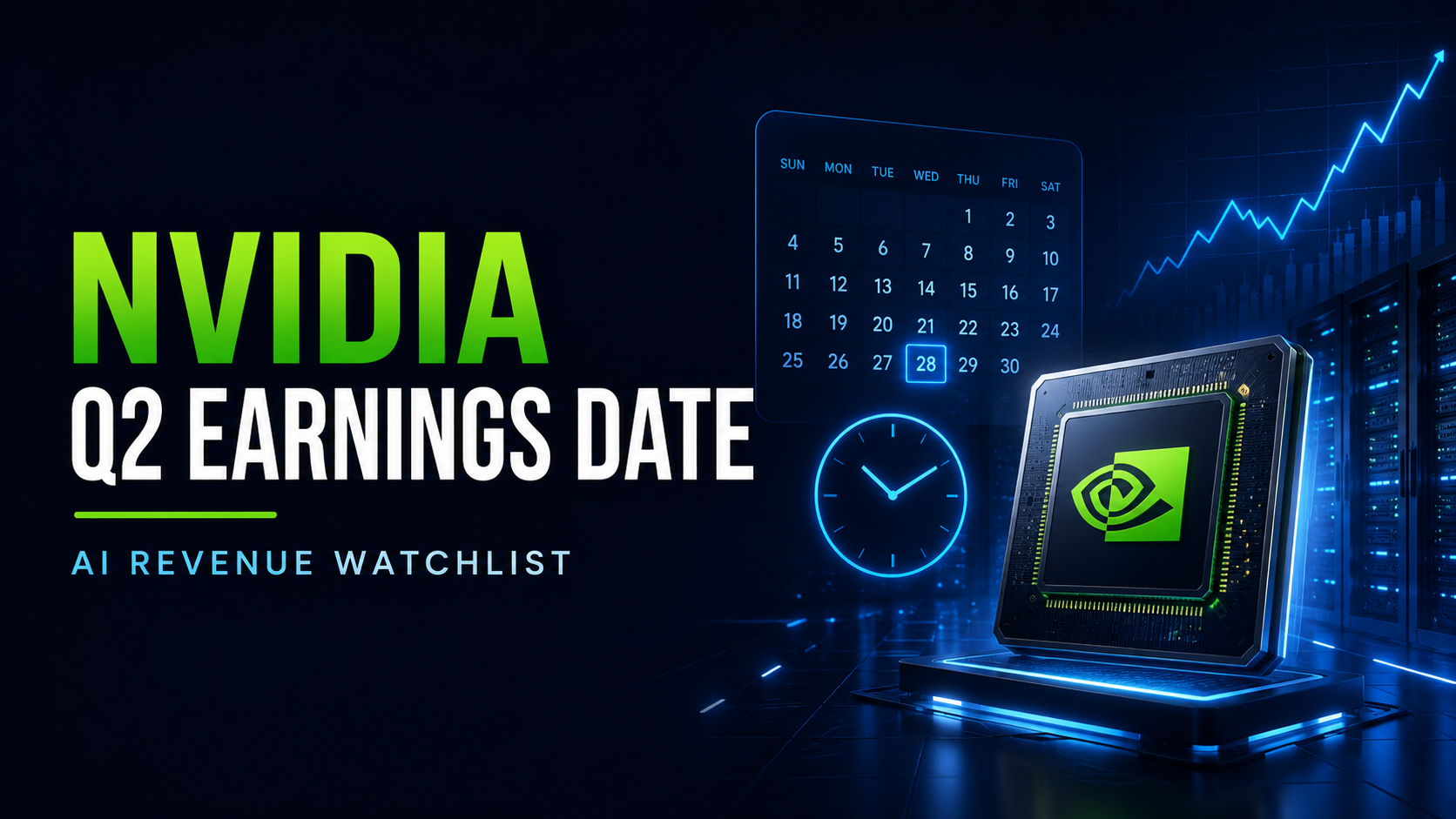
輝達2027財年第二季財報發布日期:預期發布時間、財報電話會議及AI營收觀察名單
Nvidia 2027 財年第 2 季財報預計將成為夏季最重要的 AI 市場事件之一。Wall Street Horizon 顯示,Nvidia 2027 財年第 2 季的下次財報發布日期為 2026 年 8 月 26 日星期三,於市場收盤後公布。
這絕非一次普通的財報發布。Nvidia 自身對 2027 財年第 1 季的展望設下了極高的標準:該公司預估第 2 季營收將達 910 億美元,誤差範圍為正負 2%,且 Non-GAAP 毛利率預計約為 75.0%。Nvidia 亦明確指出,其展望假設不計入來自中國的資料中心運算營收,這使得即將發布的財報能更純粹地檢驗中國以外的 AI 基礎設施需求。
對交易員而言,關鍵問題已不再只是 Nvidia 能否超越市場預期。更重要的問題在於,該公司能否持續將 AI 需求轉化為營收成長與利潤韌性,並提出足夠強勁的前瞻指引,以捍衛市場對 AI 基礎設施的溢價估值。
2026/07/06
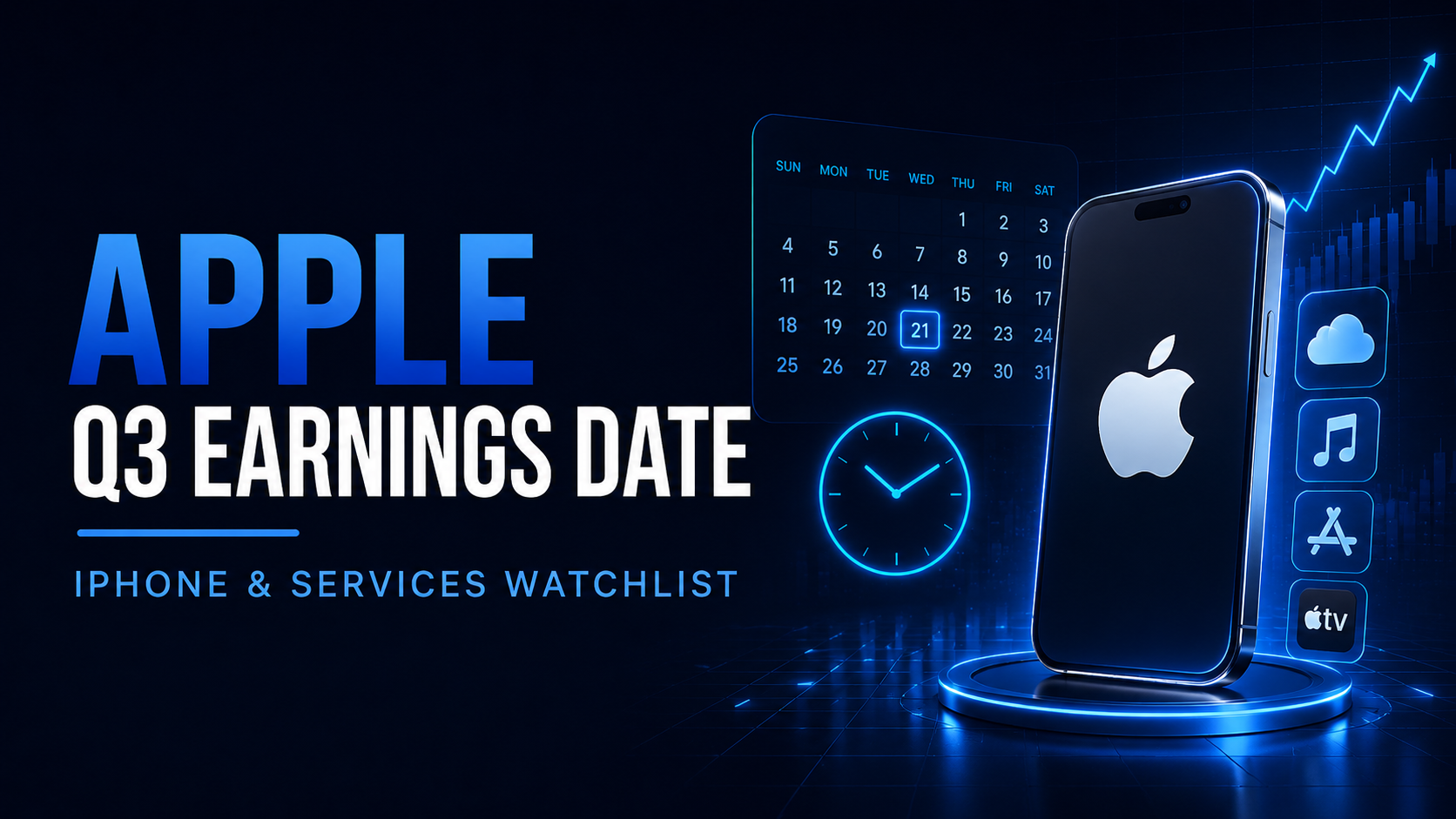
蘋果2026財年第三季財報日期:發布時間、服務營收與iPhone關注清單
蘋果2026財年第三季度的財報將成為一項關鍵考驗,決定市場應繼續將蘋果視為穩定的現金創造複利增長股,還是開始質疑其iPhone週期和服務業務的增長是否足以支撐該股的溢價。蘋果官方投資者頁面顯示,公司2026年第三季度財報電話會議定於2026年7月31日 05:00(UTC +8)舉行。Wall Street Horizon 也將蘋果下一次財報日期確認為2026年7月30日美股盤後,針對2026財年第三季度。這不僅僅是一個常規的財報發布日。蘋果最新一季設定了高基數:在2026財年第二季度,蘋果報告營收達1,112億美元,較去年同期增加了17%,創下3月季度公司總營收、iPhone營收和每股盈餘(EPS)的歷史新高。服務業務營收也創下歷史新高。對交易者而言,關鍵問題不僅僅是蘋果能否超越市場共識。更大的問題在於,服務業務的增長能否繼續維持蘋果的利潤率表現,同時iPhone需求證明硬體換機週期尚未失去動能。
2026/07/06

Mastercard 完成對 BVNK 的收購,金額高達 18 億美元——穩定幣進入全球支付核心
Mastercard 於三月宣布該交易後,已於 2026 年 8 月 3 日(UTC +8)完成對穩定幣基礎設施供應商 BVNK 的收購。
2026/08/04


熱門
目前熱門備受市場關注的加密貨幣
加密貨幣價格
按交易量計算交易量最大的加密貨幣