The cryptocurrency market is highly volatile and fast-paced. Futures trading, as an efficient and flexible derivative tool, is increasingly favored by users. This article addresses the 10 most commonThe cryptocurrency market is highly volatile and fast-paced. Futures trading, as an efficient and flexible derivative tool, is increasingly favored by users. This article addresses the 10 most common
Learn/Trading Guide/Futures/Futures FAQ...res Trading

Futures FAQ: 10 Questions to Kickstart Crypto Futures Trading

Oct 13, 2025MEXC
0m
MemeCore
M$1.00785-10.93%
Orderly Network
ORDER$0.0284+2.15%
4
4$0.009178+9.02%

The cryptocurrency market is highly volatile and fast-paced. Futures trading, as an efficient and flexible derivative tool, is increasingly favored by users. This article addresses the 10 most common questions about futures trading, covering trading logic, operational tips, fee structures, and risk mechanisms. Whether you are a beginner or an advanced trader, you will find clear answers and practical advice here.

1. What is cryptocurrency futures trading? Who should do it?


Futures trading refers to derivative trading based on the price fluctuations of crypto assets. Users do not need to actually hold the tokens but trade "contracts" that represent a bet on the future market price direction to go long or short and profit accordingly.

Futures trading is ideal for:

  • Investors with some market insight who want to profit from short-term price movements
  • Those who want to use limited capital with high leverage to improve capital efficiency
  • Users who want to profit even during downtrends

Example: User A predicts BTC will rise in the short term. When the price is 60,000 USDT, they open a long position with 10x leverage, requiring only 6,000 USDT margin to control a 60,000 USDT position. When BTC rises to 63,000 USDT, they close the position and net a 3,000 USDT profit (a 50% return).

After understanding the basic logic of Futures trading, let's look at how it differs from Spot trading to help you choose the right method.

2. What are the differences between futures and spot trading?


The biggest difference between futures and spot trading is whether you actually own the underlying asset. In spot trading, you buy and hold the actual tokens. In futures trading, you only trade price movements without owning the tokens.

Other differences include profit logic, operation methods, and risk characteristics:

Aspect
Futures Trading
Spot Trading
Ownership
No, only trade contract prices
Yes, hold actual assets
Profit Direction
Can go long or short
Profit only when price rises
Leverage
Supports high leverage
Generally, no leverage
Suitable For
Short-term, arbitrage, hedging
Long-term holding, dollar-cost averaging

Example: A user believes ETH priced at 3,500 USDT will fall and opens a short futures position. When ETH drops to 3,000 USDT, they close the position and earn 500 USDT. A spot trader can only hold and wait for a price increase.

Now that we understand the nature of trading, next, we look at the cost structure and fees in futures trading.

3. What are MEXC's Futures fees? How can traders reduce costs?


On MEXC, users pay different fees based on order type:

  • Maker (limit order): When placing an order on the order book without immediate execution, 0% fees are charged.
  • Taker (market order): When an order is executed immediately, it incurs a 0.02% fee.

Example: User A buys BTC Futures worth 10,000 USDT using a market order and pays 2 USDT in fees. User B uses a limit order and pays zero fees. For high-frequency traders, choosing the right order type can significantly reduce costs.


With fees clarified, many users want to know about leverage strategies. Next, we'll explain leverage logic and how to choose leverage multiples.

4. How do traders choose leverage? What leverage does Futures trading support?


MEXC Futures platform offers adjustable leverage from low to high multiples. Users can flexibly set leverage based on asset type, market volatility, and personal risk tolerance. Beginners are advised to use 3x–10x leverage for better risk management.

Example: User A uses 100 USDT margin to open a 10x leveraged position, controlling a 1,000 USDT position. If the market rises 5%, he gains 50 USDT; if it falls 5%, he loses 50 USDT.

Leverage amplifies both profits and risks, so understanding proper operation is crucial. Next, we cover the step-by-step trading process.

5. How to open and close Futures positions on MEXC


Trade Futures on MEXC by following these steps:

1) Log in and go to the Futures page
2) Select a trading pair (e.g., ETH/USDT) and set leverage
3) Choose margin mode: isolated or cross
4) Select order type: Limit, Market, or Trigger
5) Enter quantity and click Open Long or Open Short to establish a position
6) When the target price is reached, click Close to finish the trade


Example: User A expects a short-term drop in BTC and opens a 10x leveraged short position using a market order in the BTCUSDT Futures pair. When BTC falls from 120,000 USDT to 110,000 USDT, they close the position and earn a 10% return on leveraged capital.


6. What order types are supported? How can traders use them strategically?


MEXC Futures supports various order types to help users achieve different trading strategies:

Order Type
Description
Best Use Case
Limit Order

Executes at a specified price
Control entry price, arbitrage
Market Order
Executes immediately at the current price
Quick entry or stop loss
Trigger Order
Triggers an order when price meets a condition
Breakout strategy
Trailing Stop

Adjusts order price dynamically with market
Maximize profit
Post Only
Only posts to order book (no taker execution)
Save fees, avoid slippage


Example: User A sets a trigger order to go long on BTC when it breaks above 120,000 USDT, with take-profit at 125,000 and stop-loss at 113,000. This creates an automated trade setup.

Now that order types are clear, let's look at one of the biggest profit influencers: the funding fee mechanism.

7. What is a funding fee and why is it charged?


To keep futures prices in sync with the spot market, a funding rate mechanism is used. This involves periodic payments between long and short position holders:

  • When the market is bullish, longs pay shorts.
  • When the market is bearish, shorts pay longs.
  • Payments are exchanged every 8 hours at 00:00, 08:00, and 16:00 (UTC).

Example: User A holds a long BTC position during a bullish trend. If the funding rate is 0.01%, and User A holds a position worth 20,000 USDT, they pay 2 USDT to short position holders. The fee is exchanged between users, not collected by the platform.

After funding rates, a common question is: Why does my realized profit differ from what's shown during the trade?

8. Why is there a difference between unrealized and realized PNL?


The "Unrealized PNL" (Profit and Loss) shown during trading is only an estimate, based on current market prices. It does not include:

  • Unrealized PNL does not include fees, slippage, or funding fees;
  • Your Realized PNL is calculated upon closing the position, after all costs are deducted.

Example: A user sees an unrealized profit of 120 USDT while holding a long position. After closing the trade, only 108 USDT is credited. The difference came from a 2 USDT fee and 10 USDT funding payment.

Once the profit calculation logic is clear, we can then look at how to manually calculate PNL to help manage position performance more effectively.

9. How can traders calculate Futures PNL? USDT-M vs Coin-M


Futures trading has two major types of settlement methods:

USDT-M (Futures settled in USDT) :

  • Long PNL = (Close Price – Entry Price) × Quantity × Size
  • Short PNL = (Entry Price – Close Price) × Quantity × Size

Coin-M (Futures settled in crypto: BTC, ETH, etc.):

  • Long PNL = (1 / Entry Price – 1 / Close Price) × Quantity × Size
  • Short PNL = (1 / Close Price – 1 / Entry Price) × Quantity × Size

Example: A user opens a long ETH position at 3,000 USDT, holding 2 contracts (each worth 1 ETH). If the closing price is 3,200 USDT: Profit = (3,200 – 3,000) × 2 = 400 USDT

Now that we understand PNL, let's look at one of the most critical risk elements: liquidation.

10. What is liquidation? How is the liquidation price calculated?


When the margin balance is insufficient to cover losses, the platform will triggerliquidation, automatically closing positions to prevent negative equity.

Trigger conditions: Margin Balance + Unrealized PnL ≤ Maintenance Margin

Calculations:

Long Positions: Liquidation Price = (Maintenance Margin – Margin Balance + Entry Price × Quantity × Size) / (Quantity × Size)
Short Positions: Liquidation Price = (Entry Price × Quantity × Size – Maintenance Margin + Margin Balance) / (Quantity × Size)

Example: A user opens a long BTC position at 60,000 USDT with 50x leverage. If BTC drops to 58,000 USDT and margin becomes insufficient, the position will be liquidated at the liquidation price to prevent further loss.

Want to learn more? Read: "What is Liquidation?" and "MEXC Futures Liquidation FAQ."

11. Summary: Strategy + Risk Management = Profitable Futures Trading


Futures trading is a high-risk, high-reward tool. It suits users who have market insight and prioritize risk management. By understanding leverage, mastering order logic, minimizing costs, and managing funding and liquidation risks, you can make volatility work in your favor.

MEXC offers flexible leverage, powerful order tools, and a transparent fee structure, making it an ideal platform for both beginners and experienced futures traders to learn and grow.

*BTN-Trade Futures Now&BTNURL=https://www.mexc.com/futures/BTC_USDT*

Recommended Reading:


Disclaimer: This information does not provide advice on investment, taxation, legal, financial, accounting, consultation, or any other related services, nor does it constitute advice to purchase, sell, or hold any assets. MEXC Learn provides information for reference purposes only and does not constitute investment advice. Please ensure you fully understand the risks involved and exercise caution when investing. MEXC is not responsible for users' investment decisions.
Market Opportunity
MemeCore Logo
MemeCore Price(M)
$1.00785
$1.00785$1.00785
-0.15%
USD
MemeCore (M) Live Price Chart

Popular Articles

View More
What is Add Margin?

What is Add Margin?

Understanding the mechanism of margin calls is a required lesson for every futures trader, from beginner to expert. A margin call is not only a passive requirement set by the platform, but also a

MEXC Alpha Trader Research Weekly | ETF Outflows End After 8 Weeks, but a $425M Sell-Off Raises the Question: Who Is Driving BTC?

MEXC Alpha Trader Research Weekly | ETF Outflows End After 8 Weeks, but a $425M Sell-Off Raises the Question: Who Is Driving BTC?

Week 2 of July 2026 Statistical Period: July 8, 2026 – July 14, 2026 Data Cutoff: July 14, 2026 Core Narrative Over the past week, the crypto market experienced a dramatic reversal, shifting from a

The Complete Guide to Coin-M Perpetual Futures on MEXC

The Complete Guide to Coin-M Perpetual Futures on MEXC

In cryptocurrency derivatives, Futures trading enables investors to apply leverage to increase potential returns and to take positions in both rising and falling markets. MEXC offers two primary

BitMine’s 5.28M ETH Treasury Shows How Ethereum Is Becoming a Corporate Balance Sheet Asset

BitMine’s 5.28M ETH Treasury Shows How Ethereum Is Becoming a Corporate Balance Sheet Asset

BitMine Immersion Technologies has expanded its Ethereum treasury to 5.28 million ETH, making it one of the most important corporate holders in the Ethereum ecosystem. According to recent company

Hot Crypto Updates

View More
Microsoft Q4 FY2026 Earnings Preview: Can Azure Growth Justify a $190 Billion AI Bet?

Microsoft Q4 FY2026 Earnings Preview: Can Azure Growth Justify a $190 Billion AI Bet?

Microsoft will report its fiscal fourth-quarter 2026 earnings after the U.S. market closes on Wednesday, July 29. The earnings call will begin at 2:30 p.m. Pacific Time, or 5:30 p.m. Eastern Time,

Fed Meeting This Week: What the July 28 to 29 FOMC Decision Means for Bitcoin and Crypto Prices

Fed Meeting This Week: What the July 28 to 29 FOMC Decision Means for Bitcoin and Crypto Prices

Key Takeaways The Federal Reserve meets Tuesday and Wednesday, July 28 to 29, with the rate decision due at 2:00 p.m. ET Wednesday and Chair Kevin Warsh's press conference at 2:30 p.m. Markets price

M80 vs NIP Prediction: BLAST Bounty 2026 CS2 Preview, Maps and Score

M80 vs NIP Prediction: BLAST Bounty 2026 CS2 Preview, Maps and Score

M80 and Ninjas in Pyjamas will meet in a best-of-three Counter-Strike 2 series during the opening online stage of BLAST Bounty 2026 Season 2. The match begins on July 21, 2026, at 18:00 Singapore

When Is Spain vs Argentina? World Cup 2026 Final Time, Venue and TV Guide

When Is Spain vs Argentina? World Cup 2026 Final Time, Venue and TV Guide

Spain and Argentina will meet in the 2026 FIFA World Cup final on Sunday, July 19, at New York New Jersey Stadium in East Rutherford, New Jersey. Kickoff is scheduled for 3:00 p.m. Eastern Time,

Trending News

View More
Apple FY2026 Q3 Earnings Date: Report Time, Services Revenue, and iPhone Watchlist

Apple FY2026 Q3 Earnings Date: Report Time, Services Revenue, and iPhone Watchlist

Apple’s fiscal Q3 2026 earnings report is set to become a key test of whether the market should keep valuing Apple as a stable cash-generation compounder, or begin questioning whether its iPhone cycle
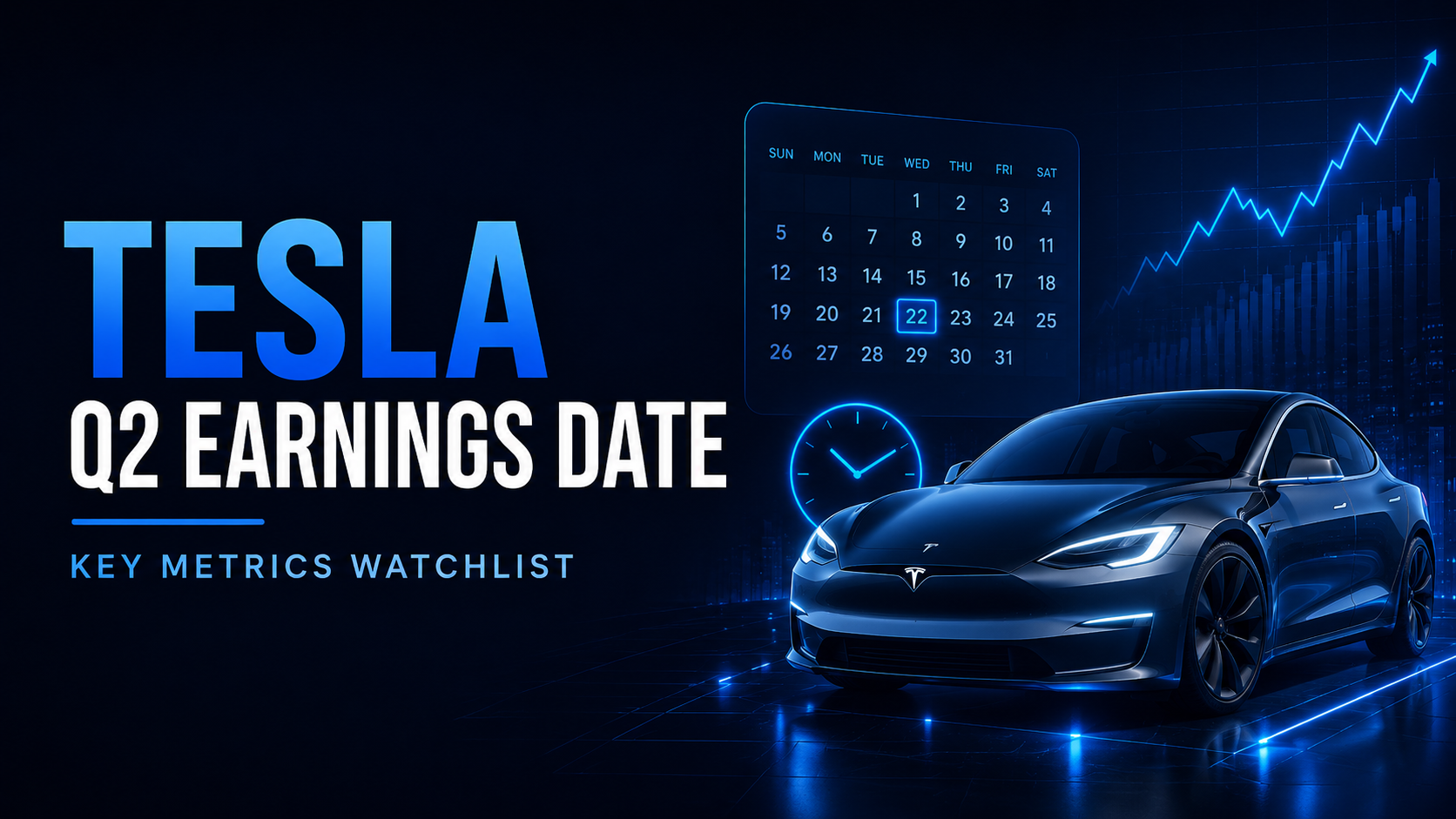
Tesla Q2 2026 Earnings Date: Release Time, Webcast and Key Metrics

Tesla Q2 2026 Earnings Date: Release Time, Webcast and Key Metrics

Tesla’s Q2 2026 earnings report is set for Wednesday, July 22, 2026, after market close, with management scheduled to host a live Q&A webcast at 4:30 p.m. Central Time / 5:30 p.m. Eastern Time. The Q2
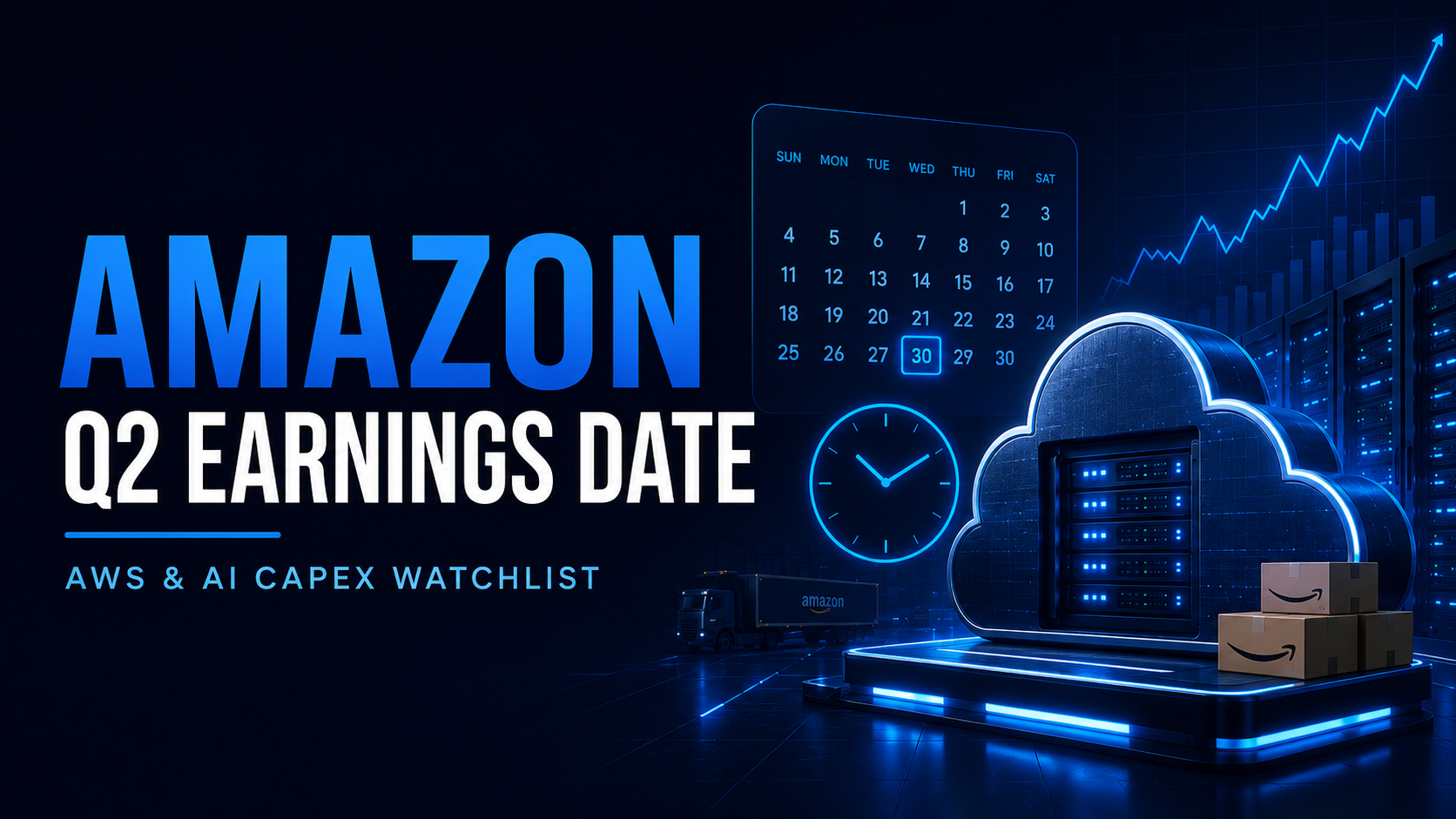
Amazon Q2 2026 Earnings Date: Expected Report Time, AWS Growth, and AI Capex Watchlist

Amazon Q2 2026 Earnings Date: Expected Report Time, AWS Growth, and AI Capex Watchlist

Amazon’s Q2 2026 earnings report is expected to be one of the most important cloud and AI infrastructure updates of the summer. Wall Street Horizon lists Amazon’s next earnings date as Thursday, July

Where to Watch Argentina vs Switzerland: TV Channel, Live Stream and Kickoff Time

Where to Watch Argentina vs Switzerland: TV Channel, Live Stream and Kickoff Time

Argentina vs Switzerland is a 2026 FIFA World Cup quarterfinal at Kansas City Stadium. The match is scheduled for July 11, 2026, at 20:00 UTC. That means 4:00 p.m. ET in the United States, 5:00 p.m. i

Related Articles

View More
Zero Threshold, Zero Slippage: How to Trade U.S. Stock Futures on MEXC

Zero Threshold, Zero Slippage: How to Trade U.S. Stock Futures on MEXC

Recently, AI concept stocks have surged dramatically, with tech giants' valuations reaching record highs, placing the U.S. stock market firmly in the spotlight for global investors. However, most cryp

How to Rearrange the Open Position Information Columns in Futures Trading

How to Rearrange the Open Position Information Columns in Futures Trading

In Futures trading, once you have opened a position, it will appear under Open Position. The Open Positions list includes Trading Pair, Position, Avg Entry Price, Fair Price, Est. Liq Price, Margin Ra

How to Export Futures Position History Data

How to Export Futures Position History Data

In futures trading, mastering and analyzing your historical trade data is the first step toward becoming a more experienced trader. MEXC's newly launched Futures Position History data export feature p

What is Add Margin?

What is Add Margin?

Understanding the mechanism of margin calls is a required lesson for every futures trader, from beginner to expert. A margin call is not only a passive requirement set by the platform, but also a crit

Sign Up on MEXC
Sign Up & Receive Up to 10,000 USDT Bonus
Is Your Stablecoin Truly Safe?
Is Your Stablecoin Truly Safe?Is Your Stablecoin Truly Safe?
Know the risks of USDT, USDC, OpenUSD & USD1