Buy Crypto
Markets
Spot
FuturesBTC
Earn
Event Center
Rewards Hub
More
Trail to Sell Orders for RealStocks: Triggers, Settings, and a Step-by-Step GuideTrail to Sell Orders for RealStocks: Triggers, Settings, and a Step-by-Step Guide
Category List
Cancel

Trail to Sell Orders for RealStocks: Triggers, Settings, and a Step-by-Step Guide

Key Takeaways

  • A Trail to Sell order is a conditional order that tracks the highest market price. When the price falls from its peak by a preset percentage or amount, the system automatically submits a sell order.
  • Its main advantage is that it can help protect unrealized gains dynamically. The order continues tracking the price during an uptrend and triggers only after the specified pullback occurs.
  • To place a Trail to Sell order in the MEXC app, set the monitoring price, tracking type (%Chg or Chg), number of triggers, order quantity, and time in force.
  • Once triggered, the system submits a market sell order. This provides faster execution but may result in slippage during periods of high volatility.
  • The trigger condition takes effect only once. Shares are not frozen before the order is triggered, and the trigger condition is monitored only during the selected trading sessions.

1. Trail to Sell Order Basics


1.1 What Is a Trail to Sell Order?


A Trail to Sell order is an automated conditional order used in RealStocks trading. It is also commonly known as a trailing stop sell order.

Unlike a fixed stop order, its trigger price automatically moves upward as the stock price rises, maintaining the preset distance relative to the highest recorded price. This distance may be set as a fixed amount or percentage. When the stock price falls from its highest point by the specified amount or percentage, the system automatically submits a sell order in response to the pullback.


1.2 What Does Trailing Mean in Trading?


Trailing means that the trigger price automatically follows the market price when it moves in a favorable direction but remains unchanged when the price reverses.

For a sell order, the trigger price moves upward as the stock price rises. When the stock price falls, the trigger price remains fixed, allowing the order to manage risk dynamically.

2. How Trail to Sell Orders Work


2.1 How Does a Trail to Sell Order Work?


Suppose an investor holds a stock currently trading at USD 100 and places a Trail to Sell order with a 5% pullback setting. The initial trigger price is USD 95.

If the stock price rises to USD 110, the trigger price automatically moves up to USD 104.50. If the stock continues rising to USD 120, the trigger price moves up to USD 114.

When the stock begins to fall, the trigger price remains fixed at USD 114. Once the stock price reaches USD 114, the condition is met, and the system automatically submits a sell order based on the preset order settings.

This process can help protect part of an unrealized gain without requiring continuous market monitoring.

2.2 What Does a 25% Trail to Sell Setting Mean?


A 25% setting means that the sell order will be triggered when the stock price falls 25% from its highest recorded price.

For example, if the stock reaches a high of USD 100, the order will be triggered when the price falls to USD 75. A larger pullback setting allows more room for price fluctuations and generally results in fewer triggers.

3. How to Place a Trail to Sell Order on MEXC


3.1 How to Place a Trail to Sell Order


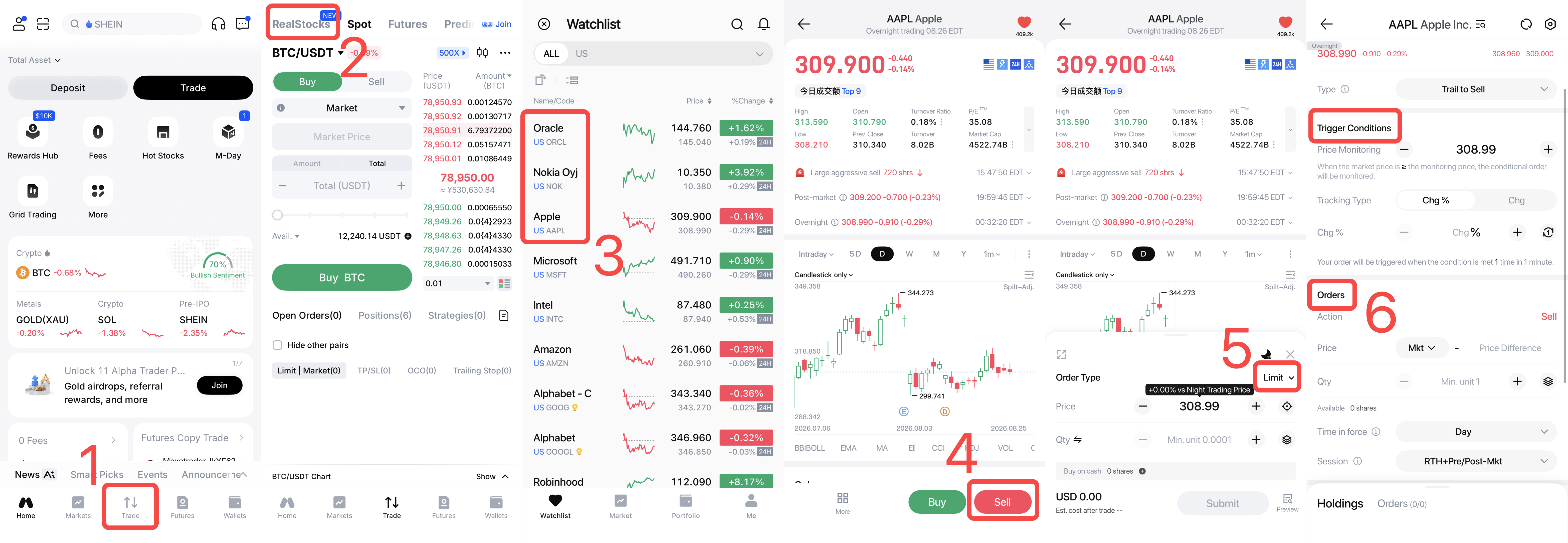
Follow these steps to place a Trail to Sell order on MEXC:
1) Log in to the MEXC app, open the RealStocks trading page, and search for the asset to sell.
2) Tap Sell in the order panel and select Trail to Sell as the order type.
3) Configure the Trigger Conditions by setting the monitoring price, selecting the tracking type (%Chg or Chg), entering the pullback percentage or amount, and setting the number of triggers.
4) Configure the order settings, including the quantity, time in force, and trading session.
5) Review the order details and tap Submit to place the Trail to Sell order. Once submitted, the order will remain pending until the trigger condition is met.

3.2 Which Execution Method Is Available?


Trail to Sell orders support market execution.

Once the trigger condition is met, the system submits a market sell order for execution at the next available price. This generally provides faster execution and a higher likelihood of being filled, but the fill price is not guaranteed. Slippage may occur during periods of high volatility.

3.3 Which Time-in-Force Options Are Available?


MEXC provides the following time-in-force options: Valid for the day, Good Till Canceled,and Set Validity.

If an order is not fully filled before it expires, the system will automatically cancel the unfilled portion.


3.4 Can a Trail to Sell Order Be Modified or Canceled?


Yes. A Trail to Sell order can be modified or canceled from the order management page before it is triggered.

Once triggered and submitted to the market, it will be processed as a regular market order and can no longer be modified as a conditional order.

3.5 How Should the Pullback Setting Be Selected?


The pullback percentage or amount should not be set too narrowly, as normal short-term fluctuations may trigger the order and cause an early exit. If set too wide, the price may fall significantly before the order is triggered. The setting may be determined with reference to the stock's historical volatility.

Beginners may consider starting with a smaller position to understand the trigger mechanism before applying the order to broader trading strategies.

4. Trail to Sell Orders Compared With Other Order Types


4.1 What Is the Difference Between a Trail to Sell Order and a Sell Stop Order?


The main difference is the trigger mechanism and intended use:
  • Trail to Sell Order: The trigger price moves upward as the market price rises. The order is triggered when the price falls from its peak by the preset amount or percentage. It is generally used to protect existing gains when a trend reverses.
  • Sell Stop Order: The trigger price remains fixed below the current market price. The order is triggered when the price falls to that level and is generally used to limit losses.

In simple terms, a Trail to Sell order moves the exit level higher as the price rises, while a Sell Stop order sells when the price falls below a fixed level.

4.2 What Is the Difference Between a Trail to Sell Order and a Limit Order?


A limit sell order is submitted directly to the market and executes only at the specified limit price or a better price. It provides price control but may remain unfilled.

A Trail to Sell order is not submitted to the market until its trigger condition is met. Once triggered, it is submitted as a market sell order. This generally provides faster execution but may result in slippage.

Its trigger price also adjusts dynamically as the market rises, so investors do not need to adjust it manually.

4.3 What Is the Difference Between a Trail to Sell Order and a Sell if Touched Order?


A Sell if Touched order has a fixed trigger price. By contrast, the trigger price of a Trail to Sell order moves upward as the stock price rises.

During an uptrend, a Trail to Sell order may capture additional gains before triggering, while a Sell if Touched order may be more suitable when there is a specific target price at which the position should be sold.

5. Trail to Sell Order Rules and Risks


5.1 Why Was the Order Not Filled After the Trigger Condition Was Met?


Possible reasons include:
1)Triggering the order only causes it to be submitted to the market. Execution still depends on market liquidity and available buy orders.
2)The account may not have enough available shares when the order is triggered, causing the order submission to fail.
3)The order may have expired and been automatically canceled.

5.2 Does a Trail to Sell Order Freeze the Position?


No. A Trail to Sell order does not freeze the position before it is triggered.

Once the trigger condition is met and the sell order is submitted, the corresponding shares will be frozen. The account must therefore have sufficient available shares when the order is triggered.

5.3 Can the Trigger Condition Take Effect More Than Once?


No. Once the order is triggered, the trigger condition will not take effect again, regardless of whether the resulting order is filled.

If you still want to sell, a new Trail to Sell order must be placed.

5.4 During Which Sessions Can a Trail to Sell Order Be Triggered?


The system monitors the trigger condition only during the selected trading sessions. If the condition is met outside those sessions, the order will not be triggered.

Review the selected session settings before placing an order to avoid missing the intended trigger.

5.5 What Risks Should Be Considered?


Trail to Sell orders involve three main risks:

1)Slippage: With Market orders, the actual execution price may differ significantly from the trigger price during periods of high volatility.

2)False Trigger: During short-term market fluctuations, a temporary pullback may cause the position to be sold earlier than intended, causing the position to be sold earlier than intended. The pullback setting should therefore reflect the stock's volatility.

3)One-Time Trigger: The trigger condition takes effect only once. It will not reactivate after being triggered, regardless of whether the resulting order is filled. The order status should therefore be monitored after triggering.


Trail to Sell Orders for RealStocks: Triggers, Settings, and a Step-by-Step Guide

Key Takeaways

  • A Trail to Sell order is a conditional order that tracks the highest market price. When the price falls from its peak by a preset percentage or amount, the system automatically submits a sell order.
  • Its main advantage is that it can help protect unrealized gains dynamically. The order continues tracking the price during an uptrend and triggers only after the specified pullback occurs.
  • To place a Trail to Sell order in the MEXC app, set the monitoring price, tracking type (%Chg or Chg), number of triggers, order quantity, and time in force.
  • Once triggered, the system submits a market sell order. This provides faster execution but may result in slippage during periods of high volatility.
  • The trigger condition takes effect only once. Shares are not frozen before the order is triggered, and the trigger condition is monitored only during the selected trading sessions.

1. Trail to Sell Order Basics


1.1 What Is a Trail to Sell Order?


A Trail to Sell order is an automated conditional order used in RealStocks trading. It is also commonly known as a trailing stop sell order.

Unlike a fixed stop order, its trigger price automatically moves upward as the stock price rises, maintaining the preset distance relative to the highest recorded price. This distance may be set as a fixed amount or percentage. When the stock price falls from its highest point by the specified amount or percentage, the system automatically submits a sell order in response to the pullback.


1.2 What Does Trailing Mean in Trading?


Trailing means that the trigger price automatically follows the market price when it moves in a favorable direction but remains unchanged when the price reverses.

For a sell order, the trigger price moves upward as the stock price rises. When the stock price falls, the trigger price remains fixed, allowing the order to manage risk dynamically.

2. How Trail to Sell Orders Work


2.1 How Does a Trail to Sell Order Work?


Suppose an investor holds a stock currently trading at USD 100 and places a Trail to Sell order with a 5% pullback setting. The initial trigger price is USD 95.

If the stock price rises to USD 110, the trigger price automatically moves up to USD 104.50. If the stock continues rising to USD 120, the trigger price moves up to USD 114.

When the stock begins to fall, the trigger price remains fixed at USD 114. Once the stock price reaches USD 114, the condition is met, and the system automatically submits a sell order based on the preset order settings.

This process can help protect part of an unrealized gain without requiring continuous market monitoring.

2.2 What Does a 25% Trail to Sell Setting Mean?


A 25% setting means that the sell order will be triggered when the stock price falls 25% from its highest recorded price.

For example, if the stock reaches a high of USD 100, the order will be triggered when the price falls to USD 75. A larger pullback setting allows more room for price fluctuations and generally results in fewer triggers.

3. How to Place a Trail to Sell Order on MEXC


3.1 How to Place a Trail to Sell Order


Follow these steps to place a Trail to Sell order on MEXC:
1) Log in to the MEXC app, open the RealStocks trading page, and search for the asset to sell.
2) Tap Sell in the order panel and select Trail to Sell as the order type.
3) Configure the Trigger Conditions by setting the monitoring price, selecting the tracking type (%Chg or Chg), entering the pullback percentage or amount, and setting the number of triggers.
4) Configure the order settings, including the quantity, time in force, and trading session.
5) Review the order details and tap Submit to place the Trail to Sell order. Once submitted, the order will remain pending until the trigger condition is met.


3.2 Which Execution Method Is Available?


Trail to Sell orders support market execution.

Once the trigger condition is met, the system submits a market sell order for execution at the next available price. This generally provides faster execution and a higher likelihood of being filled, but the fill price is not guaranteed. Slippage may occur during periods of high volatility.

3.3 Which Time-in-Force Options Are Available?


MEXC provides the following time-in-force options: Valid for the day, Good Till Canceled,and Set Validity.

If an order is not fully filled before it expires, the system will automatically cancel the unfilled portion.


3.4 Can a Trail to Sell Order Be Modified or Canceled?


Yes. A Trail to Sell order can be modified or canceled from the order management page before it is triggered.

Once triggered and submitted to the market, it will be processed as a regular market order and can no longer be modified as a conditional order.

3.5 How Should the Pullback Setting Be Selected?


The pullback percentage or amount should not be set too narrowly, as normal short-term fluctuations may trigger the order and cause an early exit. If set too wide, the price may fall significantly before the order is triggered. The setting may be determined with reference to the stock's historical volatility.

Beginners may consider starting with a smaller position to understand the trigger mechanism before applying the order to broader trading strategies.

4. Trail to Sell Orders Compared With Other Order Types


4.1 What Is the Difference Between a Trail to Sell Order and a Sell Stop Order?


The main difference is the trigger mechanism and intended use:
  • Trail to Sell Order: The trigger price moves upward as the market price rises. The order is triggered when the price falls from its peak by the preset amount or percentage. It is generally used to protect existing gains when a trend reverses.
  • Sell Stop Order: The trigger price remains fixed below the current market price. The order is triggered when the price falls to that level and is generally used to limit losses.

In simple terms, a Trail to Sell order moves the exit level higher as the price rises, while a Sell Stop order sells when the price falls below a fixed level.

4.2 What Is the Difference Between a Trail to Sell Order and a Limit Order?


A limit sell order is submitted directly to the market and executes only at the specified limit price or a better price. It provides price control but may remain unfilled.

A Trail to Sell order is not submitted to the market until its trigger condition is met. Once triggered, it is submitted as a market sell order. This generally provides faster execution but may result in slippage.

Its trigger price also adjusts dynamically as the market rises, so investors do not need to adjust it manually.

4.3 What Is the Difference Between a Trail to Sell Order and a Sell if Touched Order?


A Sell if Touched order has a fixed trigger price. By contrast, the trigger price of a Trail to Sell order moves upward as the stock price rises.

During an uptrend, a Trail to Sell order may capture additional gains before triggering, while a Sell if Touched order may be more suitable when there is a specific target price at which the position should be sold.

5. Trail to Sell Order Rules and Risks


5.1 Why Was the Order Not Filled After the Trigger Condition Was Met?


Possible reasons include:
1)Triggering the order only causes it to be submitted to the market. Execution still depends on market liquidity and available buy orders.
2)The account may not have enough available shares when the order is triggered, causing the order submission to fail.
3)The order may have expired and been automatically canceled.

5.2 Does a Trail to Sell Order Freeze the Position?


No. A Trail to Sell order does not freeze the position before it is triggered.

Once the trigger condition is met and the sell order is submitted, the corresponding shares will be frozen. The account must therefore have sufficient available shares when the order is triggered.

5.3 Can the Trigger Condition Take Effect More Than Once?


No. Once the order is triggered, the trigger condition will not take effect again, regardless of whether the resulting order is filled.

If you still want to sell, a new Trail to Sell order must be placed.

5.4 During Which Sessions Can a Trail to Sell Order Be Triggered?


The system monitors the trigger condition only during the selected trading sessions. If the condition is met outside those sessions, the order will not be triggered.

Review the selected session settings before placing an order to avoid missing the intended trigger.

5.5 What Risks Should Be Considered?


Trail to Sell orders involve three main risks:

1)Slippage: With Market orders, the actual execution price may differ significantly from the trigger price during periods of high volatility.

2)False Trigger: During short-term market fluctuations, a temporary pullback may cause the position to be sold earlier than intended, causing the position to be sold earlier than intended. The pullback setting should therefore reflect the stock's volatility.

3)One-Time Trigger: The trigger condition takes effect only once. It will not reactivate after being triggered, regardless of whether the resulting order is filled. The order status should therefore be monitored after triggering.